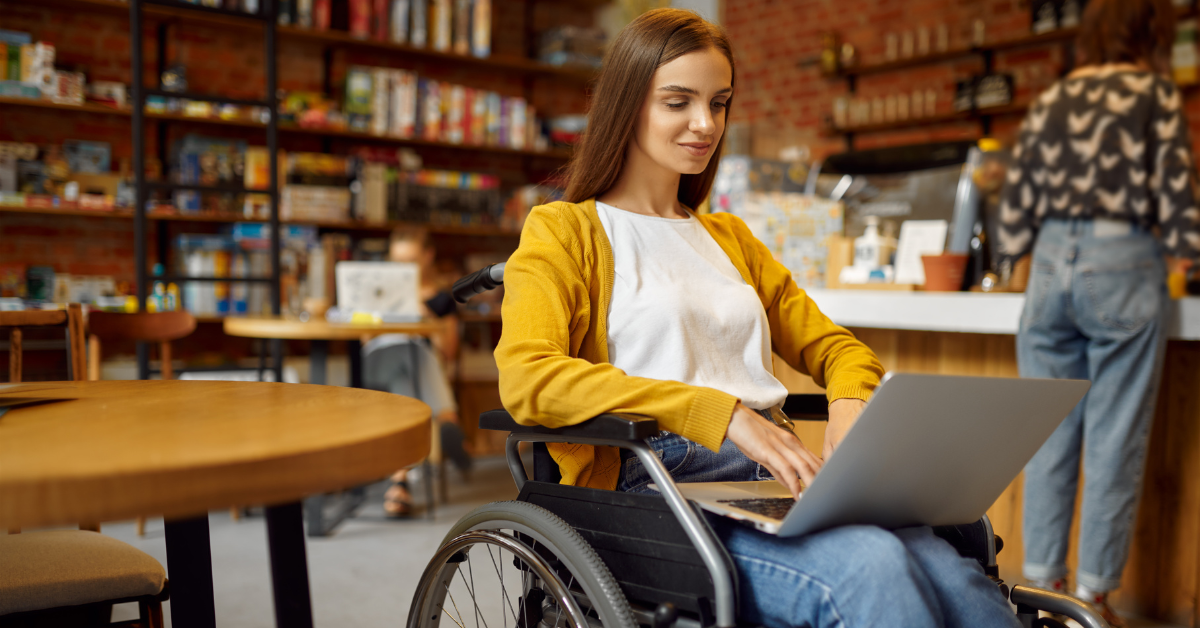
There’s a moment I’ll never forget. I was sitting on my couch with the walker next to me, and a laptop balanced on a tray, surrounded by medical equipment, feeling the pressure to work harder. I kept thinking, “I should be doing more. I should be pushing through. I should be hustling if I want this business to succeed.”
But here’s what I’ve learned since then. Hustle might be trendy, but flexibility is what builds a sustainable future, especially for entrepreneurs with disabilities.
The Problem with Hustle Culture
The business world often rewards nonstop effort. It pushes a model where success is measured by late nights, constant motion, and a packed calendar. That’s fine for someone who can recover with a weekend nap. But for disabled entrepreneurs, that model can be dangerous.
Our realities involve infusions, recovery days, chronic fatigue, and doctor appointments. Hustle culture ignores the needs of bodies that require more care. And yet, those needs don’t make us less capable. They make us strategic.
Rather than fight your body, you can design a business around sustainable business practices that honor your well-being and preserve your energy. This is more than a mindset. It is a model.
Define Your Non-Negotiables and Build Around Capacity
In The Power of the Pivot, I talk about how I learned to define my non-negotiables. These include my treatment days, time with family, and unstructured rest. They are part of my business plan, not something I try to squeeze in around the “real work.”
This isn’t about doing less. It’s about doing what lasts.
Think of your business as a living system. Just as companies reduce their carbon footprint, optimize energy efficiency, and embrace waste management to become more environmentally responsible, we can adopt similar frameworks in our day-to-day operations. You are your most important resource. Managing your natural resources—your energy, health, and time—is a key part of long-term growth.
Sustainability Isn’t Just About the Planet. It’s About You.
When people hear the word sustainability, they think of climate change, recyclable packaging, or renewable energy sources. And all of that matters. But sustainability is also about designing a business that doesn’t burn you out, physically or emotionally.
This matters even more for disabled entrepreneurs. Most of us do not have the option to work on-site or meet the same metrics as a 40-hour-a-week employee. So we adapt. We create lean business models that use less energy, require fewer raw materials, and operate with minimal overhead. That’s not just efficient. It’s a form of social responsibility.
Building With Margin: What It Looks Like in Practice
Margin is the space you create on purpose. It’s the room in your schedule, budget, and energy so that when life happens—and it will—you don’t collapse under the weight of it.
Let’s break it down:
Time margin means planning fewer meetings per day and leaving room for rest or unexpected medical needs.
Financial margin means setting aside a portion of income for sick days or emergency care.
Task margin means limiting your service offerings and resisting the urge to say yes to every opportunity.
Team margin includes hiring contractors, forming partnerships, and building a support network that can help when your capacity dips.
This isn’t just a workaround. It’s a strategy that aligns with ESG (environmental, social, and governance) values. By creating workflows that reduce waste, stress, and burnout, you are contributing to a kind of circular economy where everyone thrives, not just survives.
Adaptability Is a Sustainable Business Practice
Small businesses led by disabled entrepreneurs often outperform others in areas like creativity, problem-solving, and empathy. These are skills born from necessity.
Many of us are already practicing sustainable sourcing, using digital tools instead of physical materials, relying on virtual meetings, and reducing travel. These choices lower our environmental footprint and help us lead by example when it comes to environmental sustainability.
We may not be tracking sustainability reporting in a formal document, but the choices we make every day contribute to a more accessible and sustainable development model for future entrepreneurs.
What You’re Building Matters for Future Generations
When you create a flexible, sustainable business, you are showing others what’s possible. You are paving the way for future generations of disabled entrepreneurs. You are contributing to a new vision of success, one rooted in adaptability, not overexertion.
Whether you’re managing your own copywriting business, launching a virtual assistant agency, or coaching others through your lived experience, remember this. Every sustainable decision you make—every choice to rest, to reuse resources, to create with care—ripples outward.
You are part of a movement toward something better.
Flexibility is Your Greatest Asset
These days I don’t attempt to work during my infusions. I take that day to rest and recover because I see that as my job. The to-do list will be there the next day.
When you build a business that can flex with your life, you create something that works for the long haul. You reduce your risk of burnout. You protect your well-being. And you build a foundation that can adapt to whatever comes next.
You don’t need to hustle harder. You need to protect what matters most.
Build slow. Build smart. Build sustainable.
And most importantly, build something that leaves you whole.
Ready to build your sustainable business with real support? Download our free business plan template at Journey 2 Success and get the tools, guidance, and community designed with you in mind.